



- WordPressdgnow.net
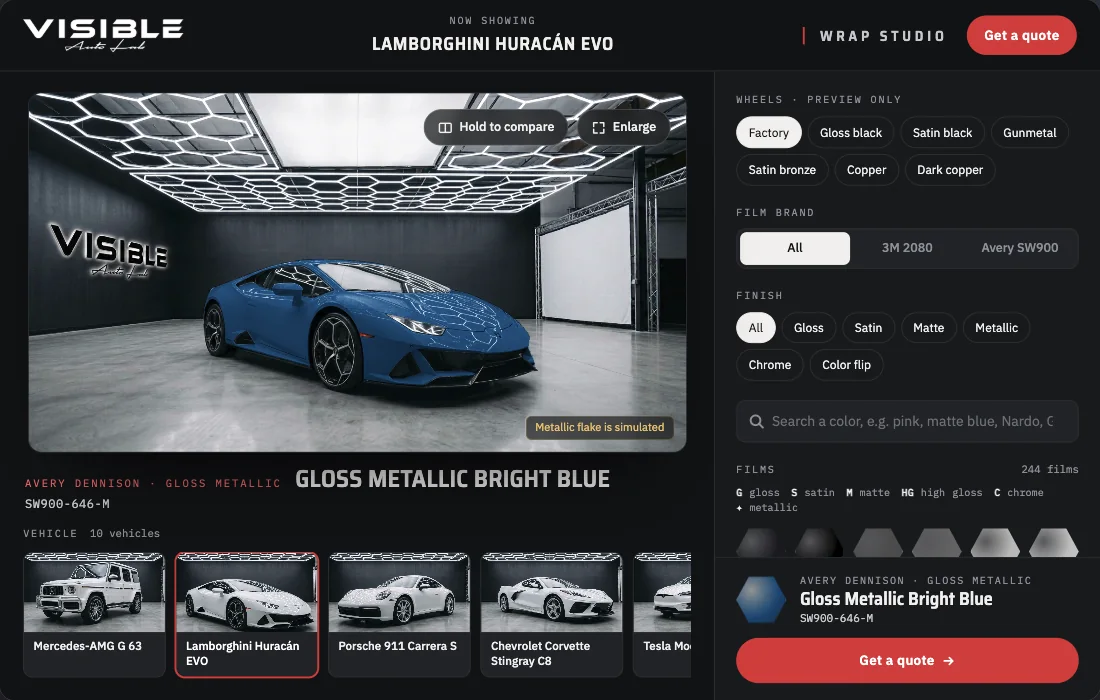
- Hand-codedWrap visualizer
- ShopifyKandyMan
Key takeaways
- Choose by what the site has to do and who will update it, not by which platform is popular.
- Shopify is for selling: products, cart, checkout and payments in one place, on a monthly plan.
- WordPress is for sites you edit often: pages, prices, photos and a blog, edited by you.
- Hand-coded is for fast, distinctive sites that change now and then, and for custom tools.
- You can mix them, and you can move later: your domain and your content go with you.
Chapter 01The difference
What is the real difference between the three?
Shopify sells, WordPress gets edited, and hand-coded gets built exactly to plan.
All three make a real, professional website. The difference is what each is built to do, who hosts it, and who makes the changes after launch.
- Shopify
An online store platform. Shopify hosts it, runs the cart, checkout and payments, and you add products and orders yourself. You pay Shopify a monthly plan.
- WordPress
A content system that runs more websites than anything else. You edit text, photos, prices and posts yourself. We build it with Elementor and it needs hosting and updates.
- Hand-coded
HTML, CSS and JavaScript written for your site alone. Nothing extra loads, so it is fast and looks like nobody else. Changes usually go through us.
Chapter 02Which fits you
Which one fits how you work?
Answer five questions about what you sell and how often things change.
Most people pick a platform because a friend uses it. A better way is to start with the job the site has to do, then who will keep it current.
- Is selling products online the main job?
- Shopify
- Will you change text, photos or prices every week or two?
- WordPress
- Do you want to write a blog or news posts?
- WordPress
- Does it change a few times a year, and should it feel one of a kind?
- Hand-coded
- Do you need a custom tool, like a quote builder or a visualizer?
- Hand-coded
Two answers point different ways? That is common, and it usually means a mix, like a WordPress site with a Shopify store beside it (chapter 7).
Chapter 03Shopify
When is Shopify the right call?
When selling is the business: Shopify runs the cart, checkout, payments and orders for you.
Shopify hosts the store, keeps it secure and handles card payments. Plans start at $29 a month paid yearly ($39 month to month), and most small stores do well on Basic. KandyMan's custom store, cart and every one of its deals run on Basic.
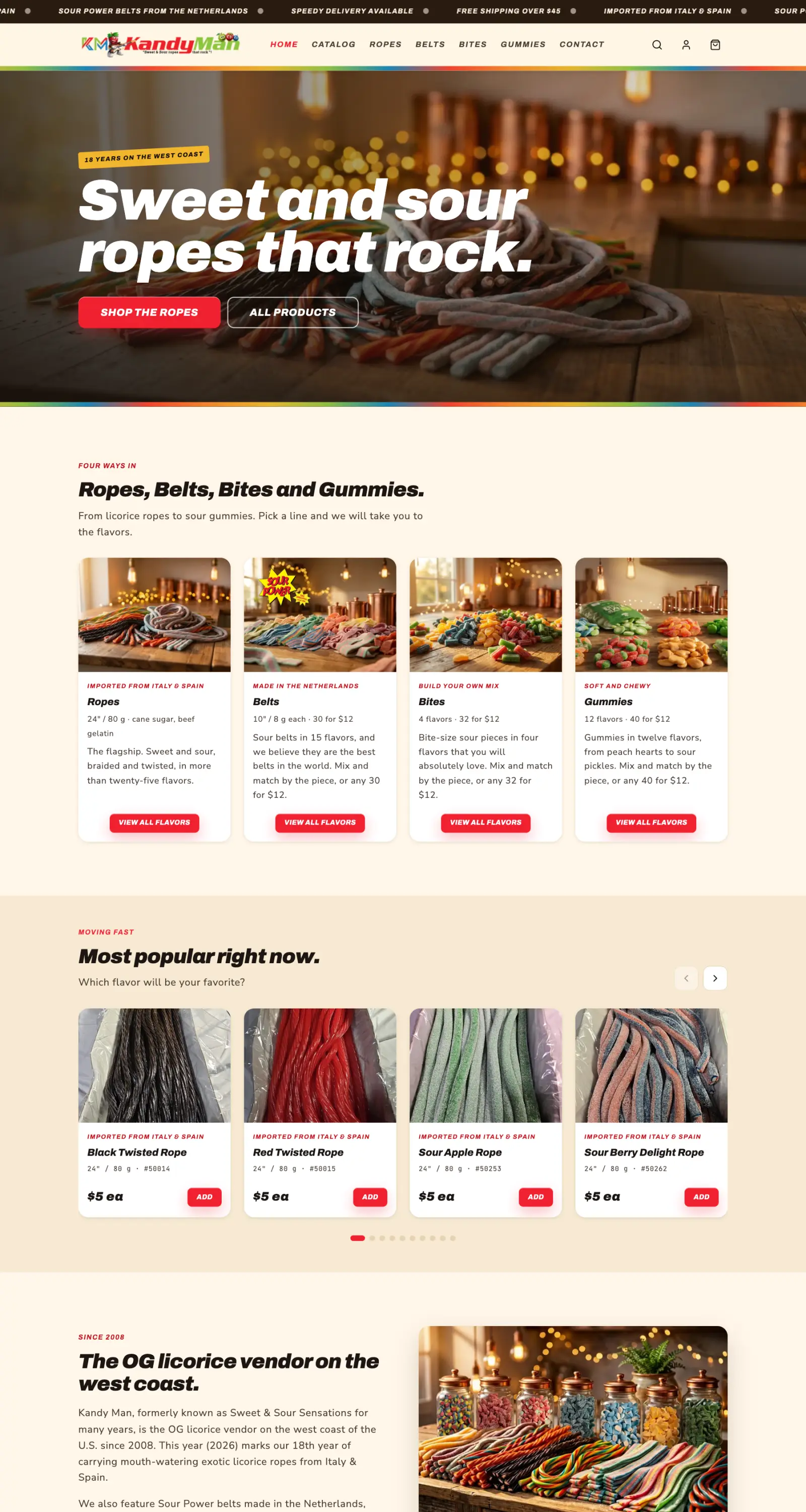
- Everything before checkout can be custom: pages, product cards, the cart and the cart panel.
- Checkout is Shopify’s standard page: it gets your colors and logo, and changing how it works needs Shopify Plus, from about $2,300 a month.
- Apps add features, and many charge every month, so add them only when Shopify can’t do the job on its own.

Before you add an app, ask if Shopify can do it on its own. KandyMan runs five mix-and-match deals with no app and no monthly fee.
Anthony Dinsmore
Chapter 04WordPress
When is WordPress the right call?
When you update text, photos, prices or posts often, or want a blog: WordPress.
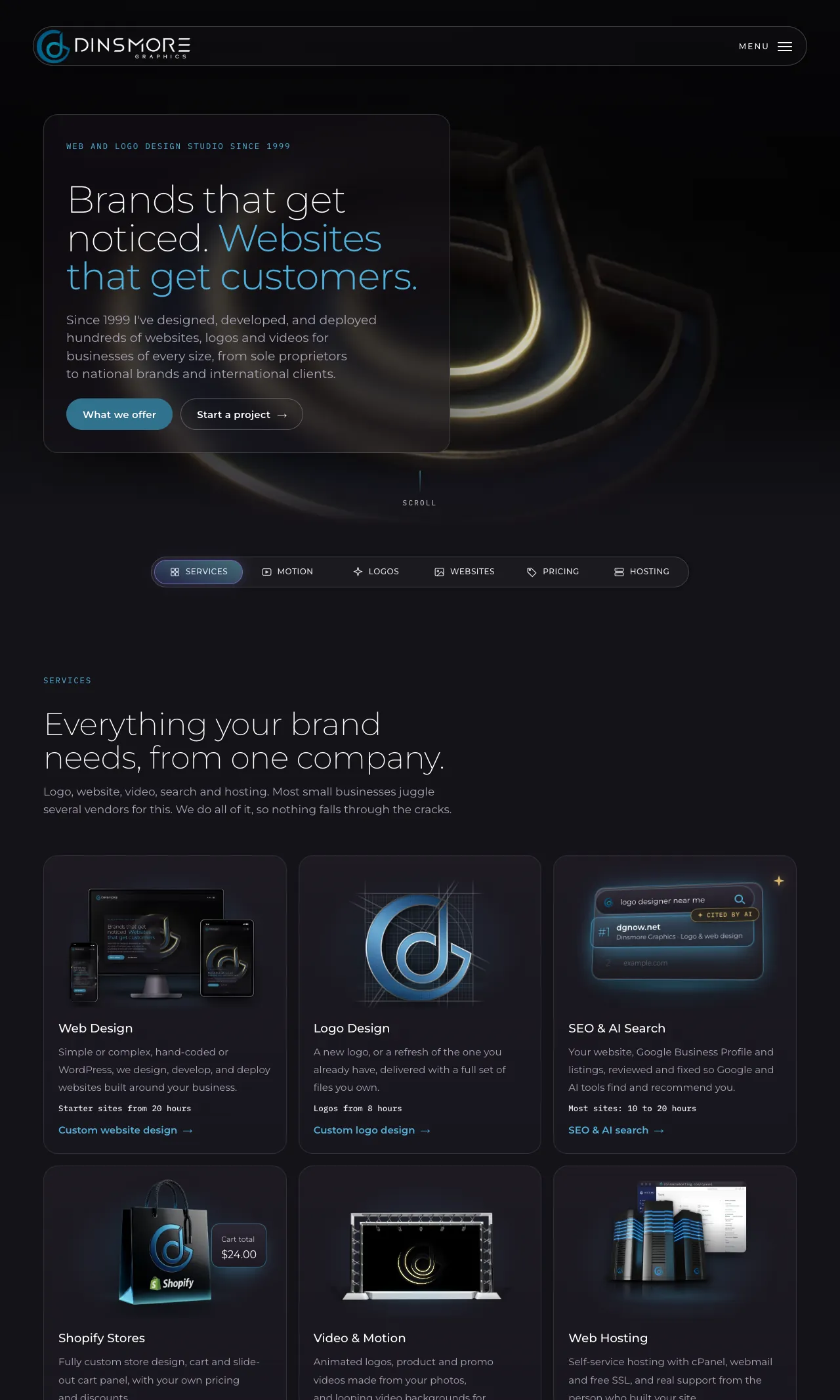
WordPress lets you edit your own pages without calling anyone. We build it with Elementor, the most popular page builder, so your pages look designed, not templated. This website, dgnow.net, runs on WordPress with Elementor: every page was designed first as a hand-coded mockup, then built in WordPress.
WordPress runs more websites than any other system, so people are always looking for ways to break into it. WordPress, its theme and plugins release updates all the time, and many of them close security holes. You can keep it updated yourself, book a Website Tune-Up ($150) at least once every 3 months, or have full-service care.
Chapter 05Hand-coded
When is a hand-coded site the right call?
When the site changes now and then and should be fast and one of a kind, or needs a custom tool: hand-coded.
Hand-coded HTML, CSS and JavaScript loads only what your site uses, so it is fast, and it can look and work exactly the way it was designed. There is no admin to update and less to break. The trade-off: you send changes to us, and they come from your hours.
- Fastest to load: nothing loads that the page doesn’t use.
- Exactly as designed: no theme or page builder deciding the layout.
- Custom tools fit right in: quote builders, visualizers and calculators.
- Hosting from $50 a year, since an HTML site needs no database.
Chapter 06Cost to run
What does each one really cost to run?
The build is estimated in hours either way; the yearly cost is where the three differ most.
Over three years, before any build or changes: a hand-coded site's hosting starts at $150, a WordPress site is about $600 with Standard hosting and Elementor Pro, and Shopify's Basic plan is $1,044 plus card fees and any apps. Shopify prices are from shopify.com, October 2026.
Chapter 07Mix or switch
Can you mix them, or switch later?
Yes to both: one business can run two platforms, and a site can move later.
KandyMan keeps its WordPress site as the home of the brand, and the store runs on Shopify at its own address, shop.kandy-man.com. Links on the main site, and kandy-man.com/store, take shoppers straight to the shop.
The home of the brand
Products, cart, checkout
Moving later is normal too. The design gets rebuilt on the new platform, and the rest carries over:
- Your domain stays yours, wherever the site lives.
- Your words, photos and products come with you and get rebuilt on the new platform.
- Old page addresses get redirects, so search engines and old links land on the right new page.
- Search Console gets the new sitemap the day it launches.
Free consultation
Not sure which fits?
Tell me about your business and how you work. We pick the platform together, and you get an estimate in hours before any work starts.
Chapter 08How we choose
How do we help you choose?
After a free consultation, you get a recommendation and an estimate in hours.
I hand-coded HTML, CSS and JavaScript for decades, and today I also build in WordPress with Elementor and in Shopify, so the platform is picked for your business, not for my habits.
- 1Tell me what you need
Two minutes: what you sell or offer, how often things change, and anything you want the site to do.
- 2A free consultation
One conversation, where we pick the platform together, and why.
- 3An estimate in hours
You see the hours before any work starts, and choose to pay as you go or with prepaid hours.
- 4Design, build, launch
Every task shows on your live hours report as it's done. Many sites are built in 1 to 2 weeks.
Questions
Straight answers.
More of what people ask about choosing a platform.
Updated
Is WordPress safe for a small business website?
Yes, when it is kept updated. WordPress runs more websites than any other system, so people are always looking for ways in, and updates close those holes. Keep WordPress, the theme and plugins updated, book a Website Tune-Up at least once every 3 months, or have full-service care.
Is Shopify good for SEO?
Yes, for a store. You can set each product’s and page’s title, description and address, and Shopify makes the sitemap for you. Some parts of the address are fixed, like /products/ and /collections/, which search engines handle fine.
Can I edit a hand-coded website myself?
You can if you are comfortable editing HTML. Most clients send changes to us and use their hours, which keeps the site fast and the code clean.
What about Wix or Squarespace?
They are all-in-one builders: fine for a simple site you want to build yourself. You rent the platform, and moving away later means rebuilding the design. We build in WordPress, Shopify or hand-coded HTML, CSS and JavaScript.
Which is cheapest to run over three years?
Before the build: a hand-coded site’s hosting starts at $150 over three years, a WordPress site is about $600 with Standard hosting and Elementor Pro, and Shopify Basic is $1,044 plus card fees and any apps. The build itself is estimated in hours either way.
Can I move my website to a different platform later?
Yes. Your domain and your content go with you, the design is rebuilt on the new platform, and redirects send old page addresses to the new ones so search engines and old links still land in the right place.